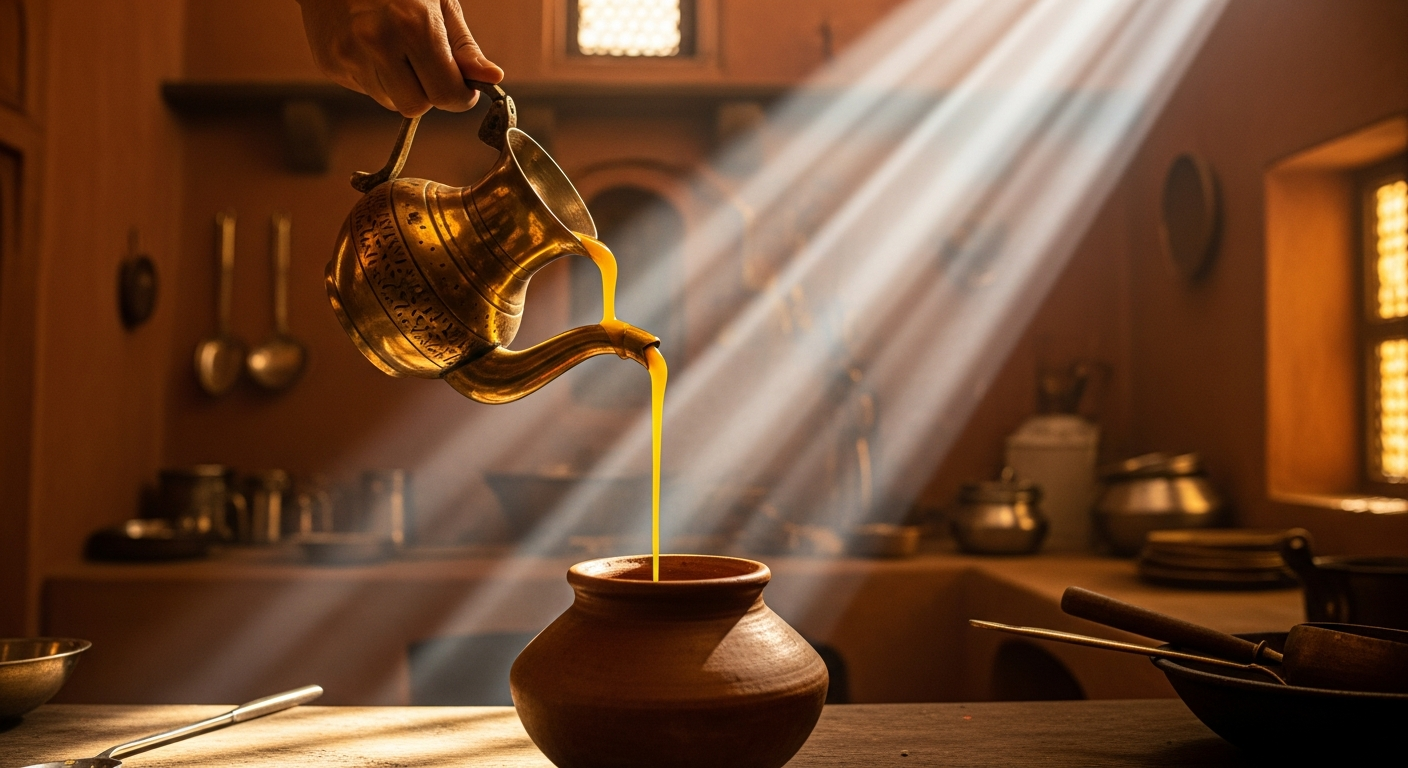
Every kitchen in India has an opinion on this.
Some families swear by cow ghee — lighter, fragrant, the kind that makes a dal smell like home. Others keep a jar of buffalo ghee near the tawa because nothing else gives a paratha that particular crispness. A few households keep both and reach for whichever the dish asks for.
Neither is wrong. But they are genuinely different — in the milk, in the fat, in the way they behave in heat. Here is what you actually need to know.
Where the difference begins — the milk itself
Buffalo milk has a higher fat content than cow milk. This is not a small difference. Buffalo milk sits at roughly 7 to 8 percent fat. Cow milk at 3 to 4 percent. That gap carries through every step of the process — into the cream, the butter, and finally into the ghee.
More fat means a denser, richer end product. Less fat means something lighter, more delicate. The ghee you get is a direct expression of the milk it came from.
What buffalo ghee is
Buffalo ghee is white to pale yellow when solid, deepening to a warm gold when melted. It is thick, dense, and carries a mild, clean flavour without a strong aroma. The higher saturated fat content gives it a high smoke point — meaning it can take serious heat without breaking down.
This makes it the workhorse ghee. The one built for cooking.
Use buffalo ghee for:
- Deep frying and shallow frying — it handles high heat without smoking or turning bitter
- Tadkas — the fat carries spices well and holds the flavour
- Biryanis and rice dishes — the richness adds body
- Indian sweets — halwa, ladoo, payasam — the density is part of the texture
- Rotis and parathas on the tawa — that crisp edge comes from fat content
Buffalo ghee also has a longer shelf life because of its lower moisture content. A well-stored jar will last comfortably through a full year.
What cow ghee is
Cow ghee is golden — sometimes a deep, almost turmeric yellow depending on the season and what the cattle have been grazing on. It is softer in texture, more liquid at room temperature in warm climates, and carries a distinctly nutty, aromatic quality that buffalo ghee does not have.
The aroma is the thing people remember. A spoonful of cow ghee melting on hot rice has a fragrance that is difficult to describe without reaching for the word "home."
It is also easier to digest. The fat composition in cow ghee is gentler on the stomach, which is why it has traditionally been the first fat introduced to a child's diet — mixed into the first solid meal, stirred into warm milk.
Use cow ghee for:
- Direct consumption — on rice, roti, idli, dosa
- A child's meals
- Khichdi and simple dals where the ghee's flavour is the star, not the background
- Ayurvedic preparations — cow ghee has a long history in traditional medicine
- Anything where you want the ghee itself to be noticed
The honest comparison
| Buffalo Ghee | Cow Ghee | |
|---|---|---|
| Colour | Pale yellow to white | Deep golden yellow |
| Texture | Dense, thick | Softer, more fluid |
| Flavour | Mild, clean | Nutty, aromatic |
| Aroma | Subtle | Pronounced |
| Smoke point | Higher | Slightly lower |
| Digestibility | Good | Easier |
| Best for | Cooking, frying, sweets | Direct use, flavour, children |
| Shelf life | Longer | Slightly shorter |
Which one should you buy?
If your kitchen does a lot of cooking — tadkas, frying, weekly sweets — buffalo ghee is the practical choice. It will work harder, last longer, and take the heat without complaint.
If you eat ghee directly, if there are children in the house, or if you care about the smell and taste of the ghee itself on simple food — cow ghee is what you want.
If you can keep both, keep both. They are not competing products. They are different tools for different moments in the same kitchen.
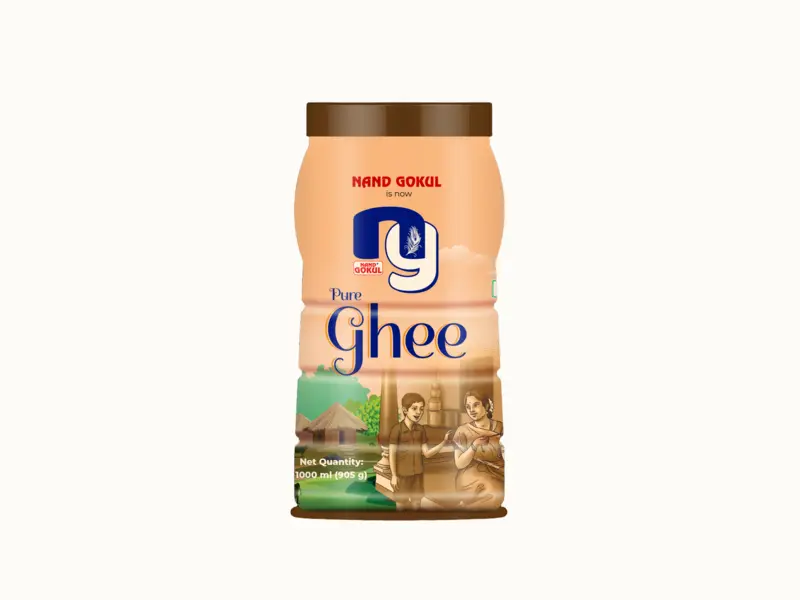
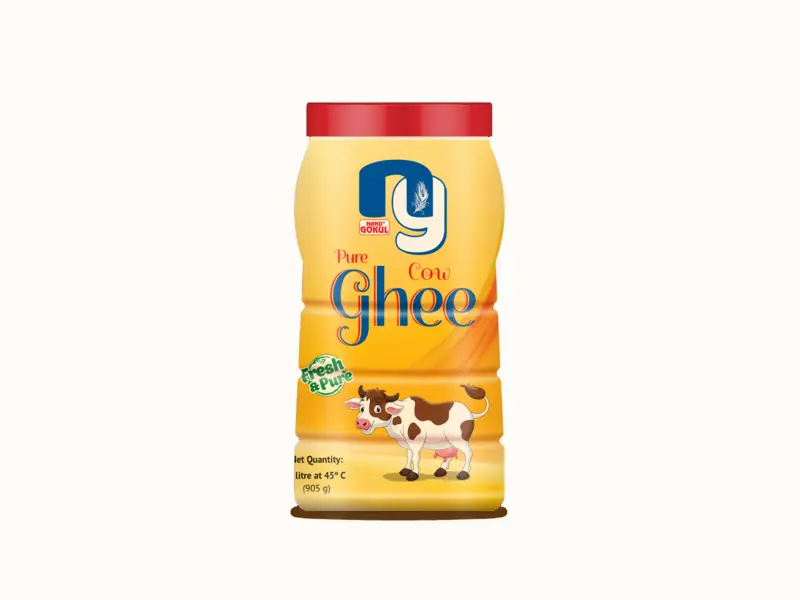
At Nand Gokul, we make both — same process, same hands, same facility in West Godavari. The only difference is the milk we start with. Everything else is identical.
Browse NG Ghee's buffalo and cow variants — in jars and pouches — on our Shop page, or read more about our heritage.